• Home
  • News
  • Results
  • Research
    • What should you know about air quality?
    • What can I personally do?
    • Discover all measurement points
    • How were the participants selected?
    • Meet your fellow participants
    • For participants
  • Partners
  • Questions
  • English
    • Nederlands
    • Français
CurieuzenAirCurieuzenAir
  • Home
  • News
  • Results
  • Research
    • What should you know about air quality?
    • What can I personally do?
    • Discover all measurement points
    • How were the participants selected?
    • Meet your fellow participants
    • For participants
  • Partners
  • Questions
  • English
    • Nederlands
    • Français
Actiris
22 Nov

Actiris

Actiris

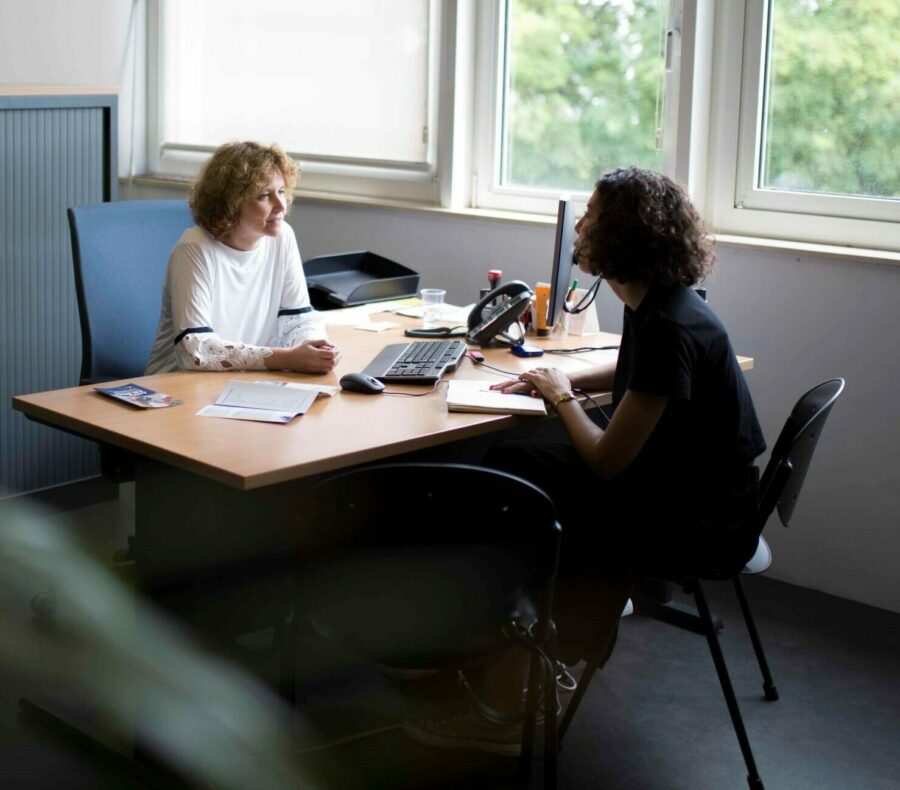
Actiris is the Brussels Regional Employment Office. As a public employment service, Actiris is the main player and provider of employment solutions in the Brussels-Capital Region. Actiris focuses on two missions: finding the right match between employer and job-seeker, and guiding the way to a job.

Why are you participating?

We are a very important public player in Brussels. Health and sustainability are central to us:

  • The fight against global warming: in 2019, we received the CO2 Neutral label, by 2030 we will concretely reduce our greenhouse gas emissions
  • We play an exemplary role in terms of ecological management and sustainable food: our head office was awarded the Ecodynamic Enterprise label by Brussels Environment, and our company restaurant was awarded the Good Food Canteen label. For example, we are participating in Thursday Veggie Day and 10 ingredients are certified organic.
  • We actively encourage sustainable mobility among our employees and the public

Participating in CurieuzenAir was therefore self-evident, and we are proud to be part of it!
waar-op-de-schaal

What do you think the air quality is like in your street?

For our measurement point in Saint-Josse, taking into account the proximity of the Brussels ring road, we expect the measurement to be between 50 and 55 µg/m³.

For our building in Evere, the traffic context is almost identical as this location is close to a busy road. We estimate that the measurement should be between 45 and 50 µg/m³.

Where: black is 55 – 60+ micrograms NO2/m3, the highest values measured: near the Brussels ring road. Light green is 20 – 25 micrograms NO2/m3, a street in a quiet green area, well below the health standard.
Brussels Boxing Academy
22 Nov

Brussels Boxing Academy

Brussels Boxing Academy

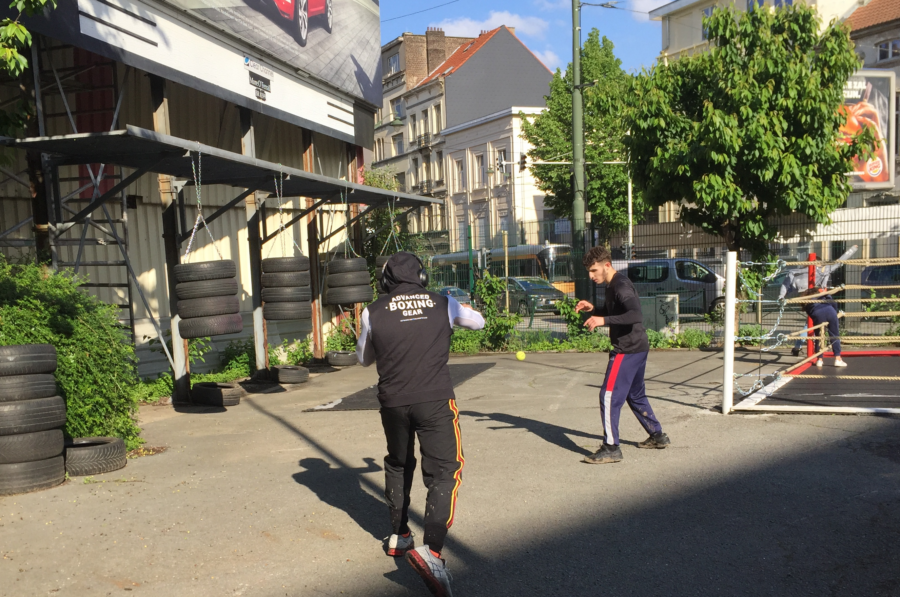
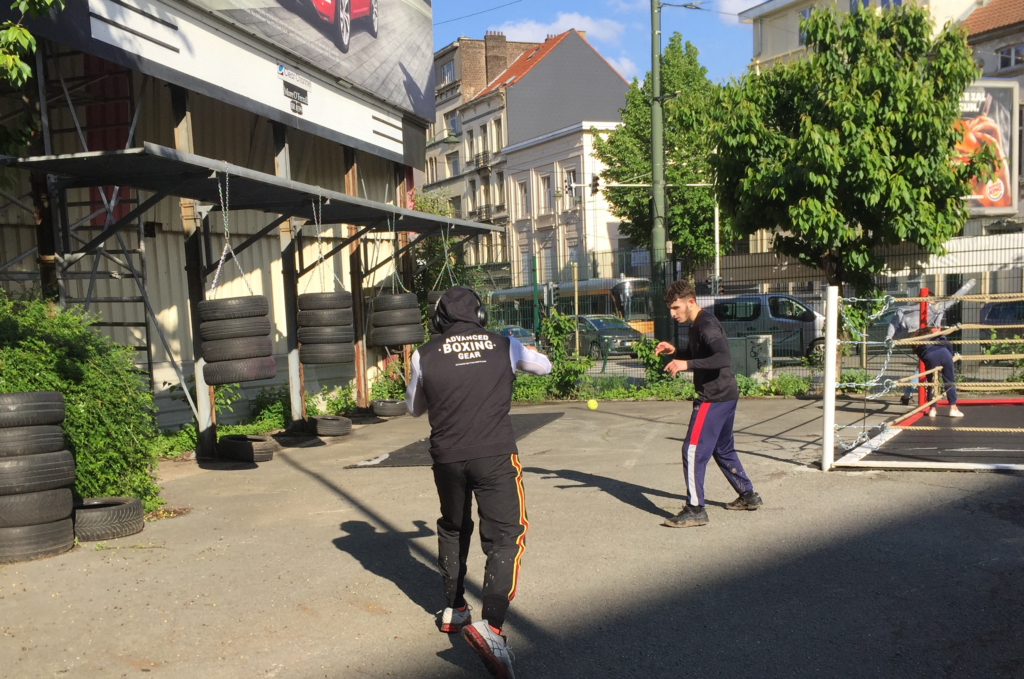
The Brussels Boxing Academy is an Olympic boxing club. Training is open to everyone: girls and boys, from 6 years of age. You can box for fun or in competition. Brussels Boxing Academy has various locations, including the old Cinoco building in Molenbeek.

Why are you participating?

During the pandemic, we were forced to train outside. We trained on the steps of the basilica, in the Parc du Cinquantenaire and in the park at Porte de Ninove. Finally, we decided to build our own outdoor training hall. We built two boxing rings and a structure with punching bags from old car tyres. We train there daily, but soon we realised that the air is not pure.

The personal development of the young people is central to our work.  Their health is very important. Healthy air goes hand in hand with sport and exercise. Healthy air also says a lot about how we live in our city: too many cars, too few good cycle paths, few parks, trees and greenery. We measure the air, but we also measure the quality of life in the city.

waar-op-de-schaal

What do you think the air quality is like in your street?

When we train outside at 4pm and the cars are queuing at the red light at the crossroads at West Station, you have to gasp for air. The air is really polluted. What is the point of protecting yourself against a virus if the air you live in makes you sick? We expect a very bad result, purple 50 – 55 micrograms NO2/m3.

Where: black is 55 – 60+ micrograms NO2/m3, the highest values measured: near the Brussels ring road. Light green is 20 – 25 micrograms NO2/m3, a street in a quiet green area, well below the health standard.
RenovaS
22 Nov

RenovaS

RenovaS

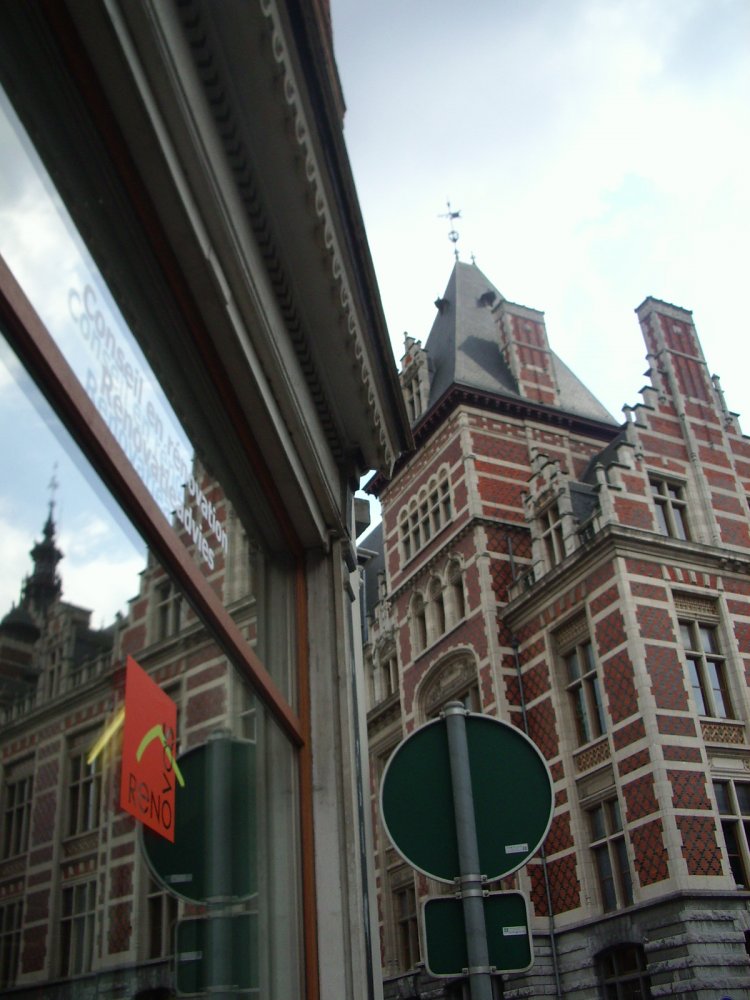
Since 1996, RenovaS has acted as a link between the regional and municipal initiatives for urban renewal and the inhabitants of Schaarbeek. The renovation advice team, made up of five architects and a housing consultant, gives free renovation and energy advice on working days. 

Why are you participating?

Healthy air is of fundamental importance. Unfortunately, the population of Brussels and Schaerbeek suffers greatly from air pollution, typical of large cities. We strongly believe in the importance of objective information to raise awareness and involve citizens.

Poor indoor air quality is a problem we face every day. Our architects give advice on how to improve and renovate homes while respecting heritage, urban planning and the environment.

waar-op-de-schaal

What do you think the air quality is like in your street?

We expect a light purple result, 45-50 NO2/m3.

Where: black is 55 – 60+ micrograms NO2/m3, the highest values measured: near the Brussels ring road. Light green is 20 – 25 micrograms NO2/m3, a street in a quiet green area, well below the health standard.
CurieuzenAir and Earthwatch measure chemical substances in the air at 30 locations in Brussels
21 Nov

CurieuzenAir and Earthwatch measure chemical substances in the air at 30 locations in Brussels

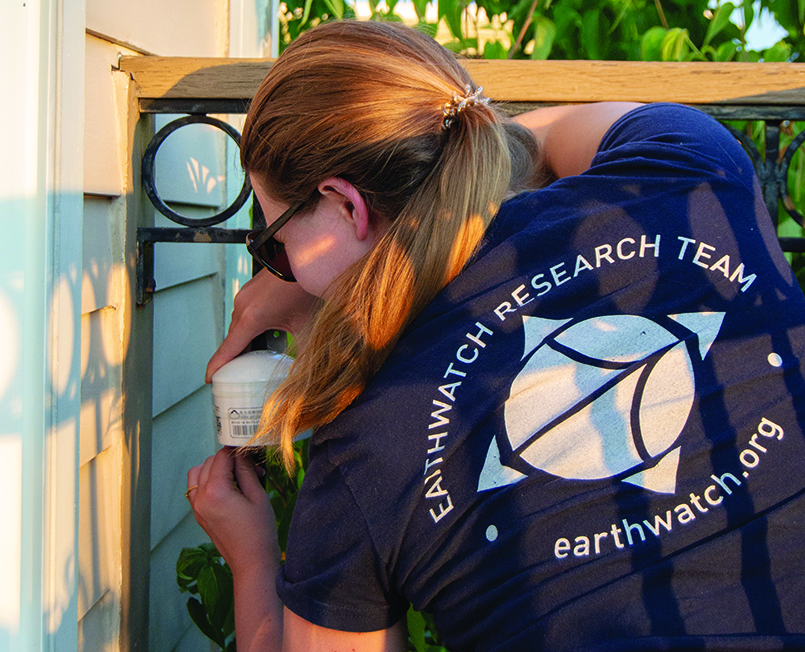
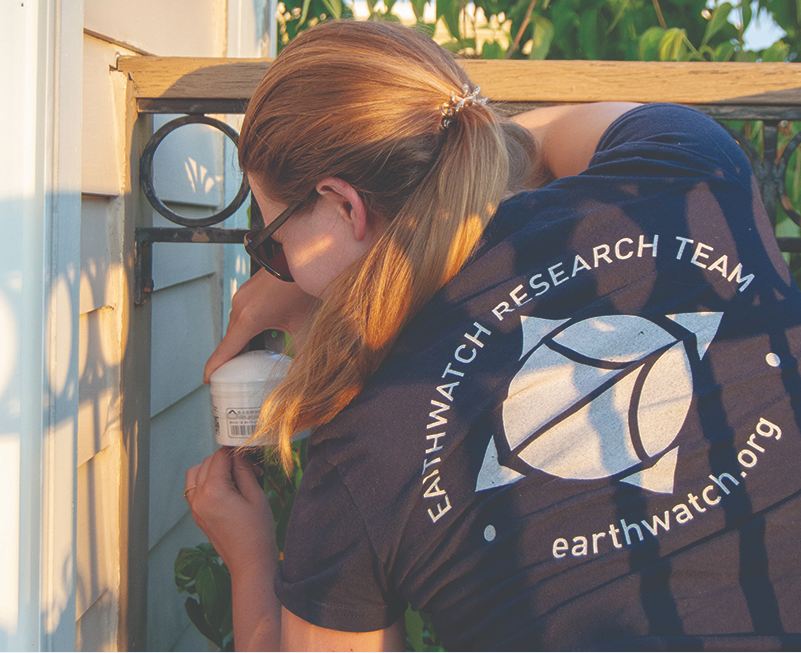
As the Brussels partner of Earthwatch, an American climate organisation, CurieuzenAir measures the concentration of chemical substances in the air at 30 special locations. The pilot project, christened Operation Healthy Air, uses a new type of sensor to track harmful substances in the air for 14 days in Madrid, Paris, London and Brussels. 

Together with 3.000 Brussels residents, CurieuzenAir is investigating the concentration of NO2 in the air. We chose nitrogen dioxide because it is the main indicator of air pollution from traffic. However, there are also many other substances that can have an impact on our health.

With Operation Healthy Air, CurieuzenAir and Earthwatch are therefore joining forces. Operation Healthy Air investigates the air quality in Madrid, Paris, London and Brussels. The collaboration stems from our common mission to collect objective data and inform citizens about the air they breathe.

As a partner in Earthwatch’s research, we selected 30 locations across the Brussels-Capital Region, including Ancienne Belgique, Triodos Bank and Erasmushogeschool. One of our scientific collaborators installs a sensor on site that continues to measure for 14 days.

The sensor, developed at the American Yale University, makes it possible to detect a whole range of chemical substances in the air with a small and simple device. This is a pilot project in which, among other things, the concentration of PCBs and phthalates is measured: substances that can originate from traffic, industry and agriculture.  After the measurements have been completed, the sensors will be analysed by researchers from Yale University.

23 October marks the end of measurements
22 Oct

23 October marks the end of measurements

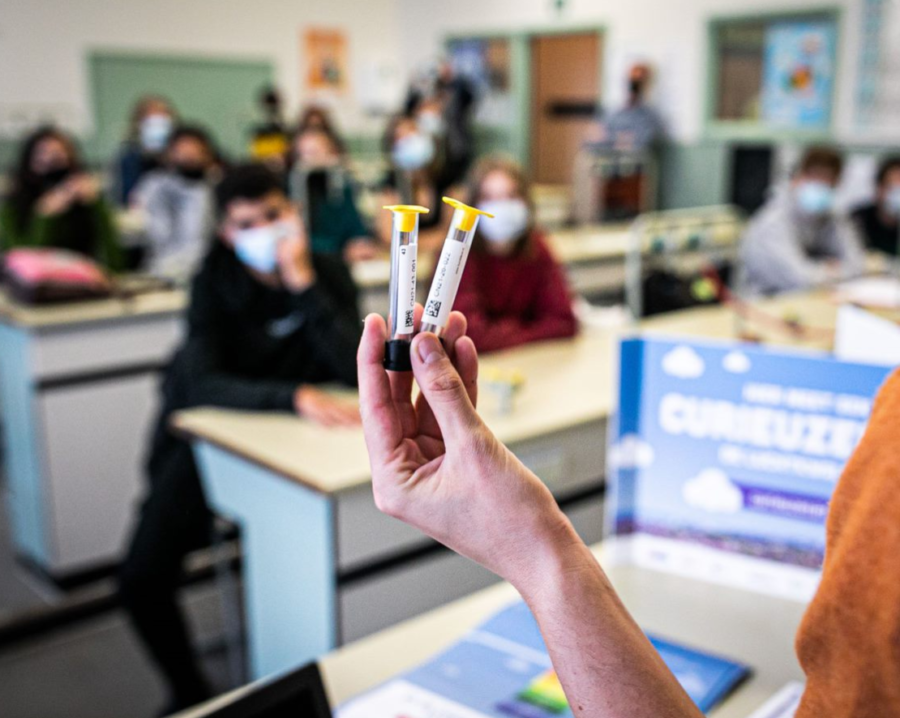
After four weeks of measurements, the largest citizen science project on air quality in Brussels will end on 23 October. Participants will remove the measuring panels from their windows and return the tubes to the laboratory for analysis.

If you passed by Brussels last month, you could hardly look past the blue CurieuzenAir panels in the streets. 3.000 Brussels residents put up a measuring panel on their window to gain more insight into the air quality in their street.

On 23 October, the measurements were completed and the participants returned their measuring tubes for analysis. In the laboratory, the total quantity of NO2 ‘captured’ in the measuring tubes is determined, after which the average concentration of NO2 in the outside air can be calculated. The measurement results then undergo a strict quality control and are calibrated against the measuring stations of Brussels Environment.

In March 2022, the results will be announced via an interactive dot map on the websites of De Standaard, Le Soir and BRUZZ.

What should you pay attention to when you return your tubes on 23 October?


Remove your panel from the window and close the tubes
On Saturday 23 October you take the measuring plate from your window. Take the tubes from the panel and close them with the yellow caps. Put the tubes in the return envelope.

If you no longer have the yellow caps, use a piece of masking tape or paper tape to close the tubes. Do not put any solid objects in the tubes!

Don’t have a return envelope? Or one without a DPD label? Please let us know here. We will send you a new DPD label by e-mail, which you can stick on another envelope.

Tell us when you stopped the measurements: we strive for every CurieuzenAir to remove the measuring board from his or her window at 9 o’clock in the morning on 23 October. Let us know via the link in the email you received from us when you removed your measuring board.

Bring your tubes in the return envelope to a DPD Pickup point of your choice.
It is important that you bring the tubes in the return envelope, on the 23rd of October, to a DPD Pickup point of your choice. This way, the tubes will arrive in time at the lab for analysis. Do not put them in a red bpost box: they could get lost.

Brussels turns blue
01 Oct

Brussels turns blue

What an enthusiasm! Last weekend, 3.000 Brussels residents installed their CurieuzenAir measuring kit. From the heart of Brussels to the Bois de la Cambre. We made an overview of the best posts on social media. Share your photos with #CurieuzenAir

View this post on Instagram

Een bericht gedeeld door Veerle De Vos (@devosve)

View this post on Instagram

Een bericht gedeeld door Simone Roden (@simimoi1)

View this post on Instagram

Een bericht gedeeld door Joeri Van de Velde (@torobrux)

Happy to have been selected as one of the 3000 Brussels citizens to help this huge citizen science project get a better feel of air quality in Brussels #CurieuzenAir @curieuzenair
More info on https://t.co/FFIB8MRD48 pic.twitter.com/brecr8zdzL

— Simone Chiaretta (@simonech) September 25, 2021

L'air des rues de #Bruxelles est-il sain ? 🙋‍♀️Fière de faire part des 3000 Bruxellois qui participent dès aujourd'hui à une mesure à grande échelle. Nous allons mesurer la quantité de dioxyde d'azote dans l'air extérieur pendant 4 semaines. #CurieuzenAir pic.twitter.com/AoHIwyVWwB

— Nora Bednarski (@NoraBednarski) September 25, 2021

Nous participons à la mesure de la qualité de l'air à Bruxelles. #CurieuzenAir @curieuzenair pic.twitter.com/wZao1l38yX

— Mathieu Laurent (@Matheyes) September 25, 2021
The European Commission
29 Aug

The European Commission

The European Commission

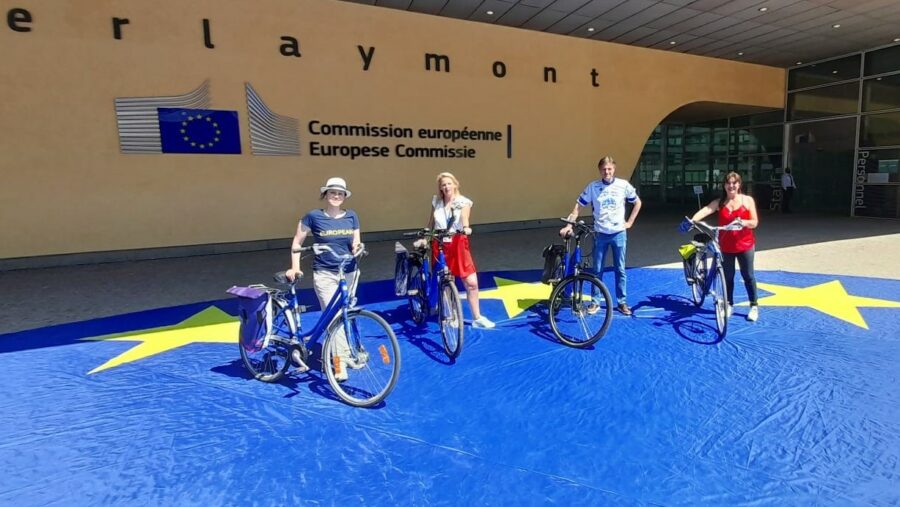
The European Commission proposes laws and implements the policies of the European Union, together with the Member States. It acts as the EU’s voice in the world. The work of the European Commission is steered by a team of 27 Commissioners, led by President Ursula von der Leyen. In each Member State, a team represents the Commission. Interview with Stefaan De Rynck, Head of the Representation in Belgium.

Why are you participating?

The Commission wants to further strengthen its role as Brussels’ citizenship. Of our 32,000employees, around two thirds work and live in Brussels. We have a responsibility as a large institution to the City that hosts us. We would therefore like to contribute to map out the air quality in Brussels. We are also interested in the air quality in which our employees work and live. In any case, in the coming years the Commission will continue to work towards the goal of becoming climate neutral itself.

waar-op-de-schaal

What do you think the air quality is like in your street?

We expect that the air quality in our street is not optimal, since our office is located at the exit of the Cinquantenaire tunnel where many cars come out to join the busy Rue de la Loi . We are probably just below the European health standard, in the orange zone (35-40 µg NO2/m³.). Certainly, the exhaust fumes will have a negative effect on the air quality. We are curious about our result but also about that of all other places in Brussels.

Where: black is 55 – 60+ micrograms NO2/m3, the highest values measured: near the Brussels ring road. Light green is 20 – 25 micrograms NO2/m3, a street in a quiet green area, well below the health standard.
Church of Our Lady of the Sacred Heart
29 Aug

Church of Our Lady of the Sacred Heart

Church of Our Lady of the Sacred Heart

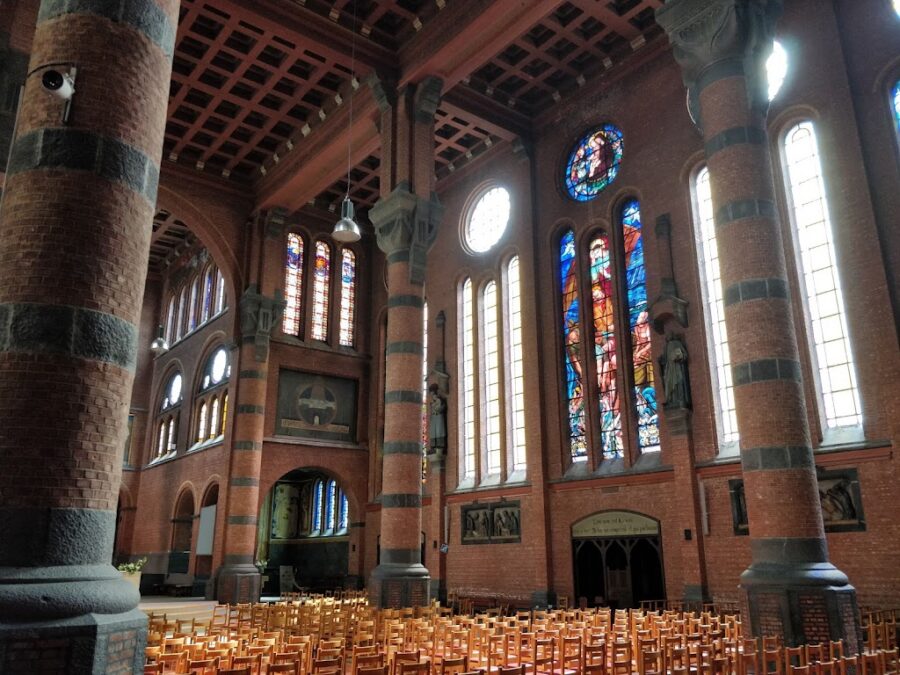
Even the church is involved. Guy Rolin (65) has been the chairman of the churchwarden of the Notre Dame du Sacré-Coeur church in Etterbeek for more than 10 years.  Since he retired, he has been involved in many non-profit organisations in Brussels.

Why are you participating?

I see our participation as a form of citizenship. If we want to change public behaviour and influence political choices, we need data.

We also think clean air is extremely important. We attach great importance to our diet, but the air we breathe is just as important. Most people have no idea what they are exposed to on a daily basis.

waar-op-de-schaal

What do you think the air quality is like in your street?

In general, our immediate surroundings do not seem particularly polluted. I would hope that we are slightly below the health standards, around 30 µg NO2/m³. Very occasionally, about two or three times a year, there is a disturbing, even annoying, smell of burning gas in our street.

Where: black is 55 – 60+ micrograms NO2/m3, the highest values measured: near the Brussels ring road. Light green is 20 – 25 micrograms NO2/m3, a street in a quiet green area, well below the health standard.
Recyclart
29 Aug

Recyclart

Centre Recyclart

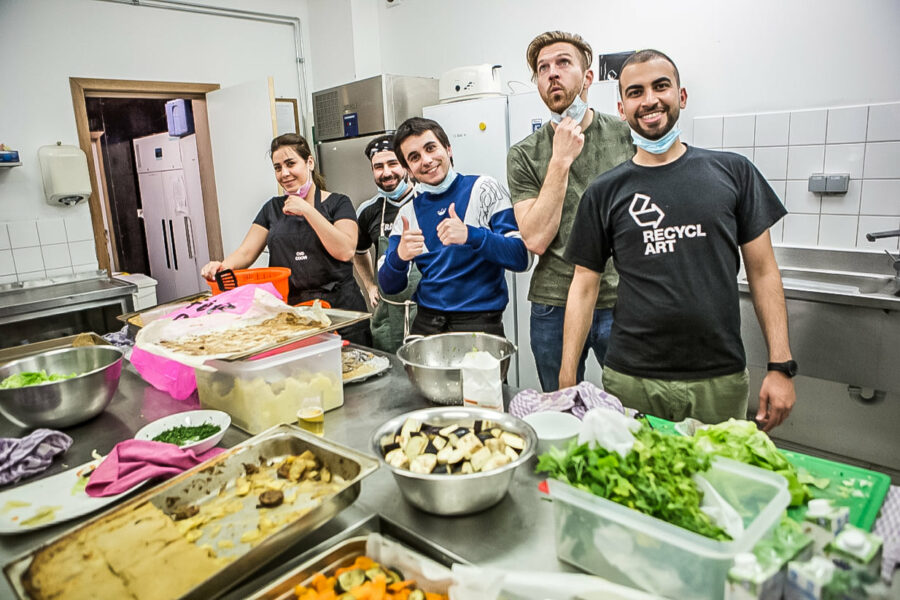
Recyclart is at the crossroads between an artistic centre and social economy. Born and raised in Brussels-Chapel station in 2000 and based in Molenbeek since 2018, Recyclart offers special attention to emerging artists. In the wood and metal workshops of Recyclart Fabrik, some fifteen employees are engaged in a social integration process, making furniture and design objects.

Why are you participating?

As a multidisciplinary art centre with a strong urban identity, it goes without saying that we would like to participate in a study that analyses a characteristic element of an urban environment: air quality. And measuring is knowing: the results of the study can contribute to the Region’s vision on mobility and the environment.

We knew about the project from Flanders in 2018 and thought from the start that it would be interesting to do this in Brussels as well. As an organisation, we are very conscious of the environment, so we only cook vegan food and we recently replaced one out of two company vans by cargo bikes.

waar-op-de-schaal

What do you think the air quality is like in your street?

We have no illusions about the air quality in our street. The proximity of major roads and urban industry – and perhaps river traffic on the canal? – will certainly have an impact. At the same time, our street itself is quite wide and much less densely built-up than some of Brussels’ big boulevards. We expect a number of around 45 µg NO2/m³. We are Curious!

Where: black is 55 – 60+ micrograms NO2/m3, the highest values measured: near the Brussels ring road. Light green is 20 – 25 micrograms NO2/m3, a street in a quiet green area, well below the health standard.
University Hospital Brussels
29 Aug

University Hospital Brussels

University Hospital Brussels

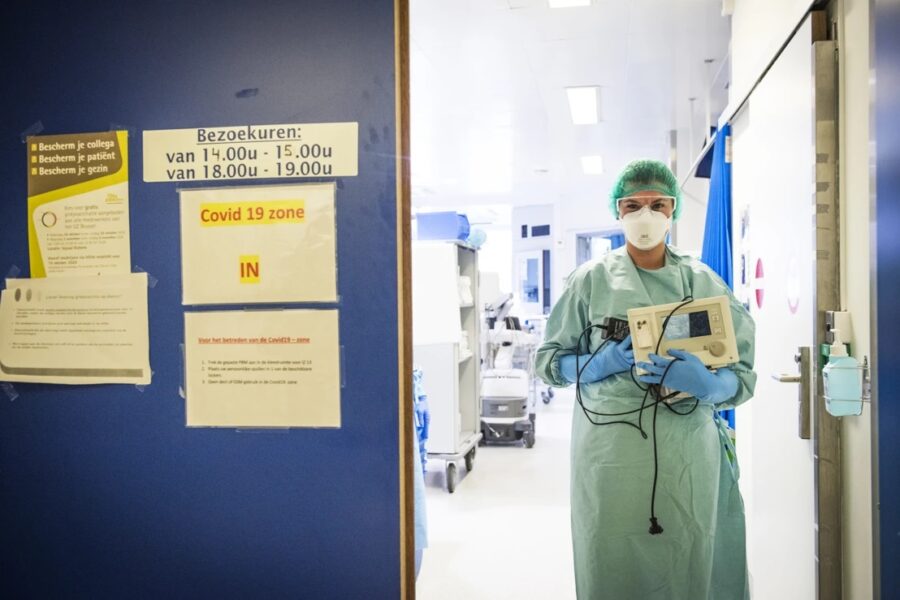
The UZ Brussel is a university hospital and was established as a part of the Vrije Universiteit Brussel. In addition to full medical care, the UZ Brussel also offers an important training function and focuses on scientific research.

Why do you participate?

We see it as our social duty to participate in a citizen survey such as CurieuzenAir. In addition, we are simply very curious about the air that our 4,000 employees and multiple patients breathe every day. More than 10,000 people come to the campus every day, mostly by car given our location right next to the Brussels ring road.

For years, the UZ Brussel has been struggling with high traffic and parking pressures, which is why we reduced the car share of our staff by 20 percent. We are also actively working on a sustainability operation in which we focus on the greening and insulation of our facilities and buildings. As a health organisation, it goes without saying that we attach great importance to healthy air. Fact: our CEO, Prof. Marc Noppen, is a lung specialist himself!

where-on-the-scale

What do you think the air quality is like in your street?

We fear that at peak times we will measure concentrations of 50 µg NO2/m³ and thus end up in the ‘purple zone’.

Where: black is 55 – 60+ micrograms NO2/m3, the highest values measured: near the Brussels ring road. Light green is 20 – 25 micrograms NO2/m3, a street in a quiet green area, well below the health standard.
  • 1
  • 2
  • 3

About CurieuzenAir

CurieuzenAir is a citizen science project that measures the air quality in Brussels.
It is an initiative of the University of Antwerp, the urban movement BRAL and the Université libre de Bruxelles, in close collaboration with Bloomberg Philanthropies, Brussels Environment, De Standaard, Le Soir and BRUZZ.

Search

Our privacy policy

© 2026 · Curieuzenair

We gebruiken cookies op deze website om je surfervaring te optimaliseren.
Door op 'accepteren' te klikken, ga je hiermee akkoord.
Privacy statementACCEPTREJECT
Manage consent

Privacy Overview

This website uses cookies to improve your experience while you navigate through the website. Out of these, the cookies that are categorized as necessary are stored on your browser as they are essential for the working of basic functionalities of the website. We also use third-party cookies that help us analyze and understand how you use this website. These cookies will be stored in your browser only with your consent. You also have the option to opt-out of these cookies. But opting out of some of these cookies may affect your browsing experience.
SAVE & ACCEPT