• Home
  • News
  • Results
  • Research
    • What should you know about air quality?
    • What can I personally do?
    • Discover all measurement points
    • How were the participants selected?
    • Meet your fellow participants
    • For participants
  • Partners
  • Questions
  • English
    • Nederlands
    • Français
CurieuzenAirCurieuzenAir
  • Home
  • News
  • Results
  • Research
    • What should you know about air quality?
    • What can I personally do?
    • Discover all measurement points
    • How were the participants selected?
    • Meet your fellow participants
    • For participants
  • Partners
  • Questions
  • English
    • Nederlands
    • Français
CurieuzenAir reveals a striking disparity in air pollution levels across Brussels
18 Mar

CurieuzenAir reveals a striking disparity in air pollution levels across Brussels

Between 25 September and 23 October 2021, 3.000 Brussels citizens participated in CurieuzenAir, the largest ever citizen science project on air quality in our capital. For one month, citizen scientists mapped the concentration of nitrogen dioxide (NO2) — a key indicator of air pollution caused by traffic — in their streets via measuring tubes on the facades of their homes. The project resulted in a unique dataset showing the impact of road traffic on air quality in Brussels in great detail. Results range from ‘excellent’ to ‘extremely poor’ air quality across Brussels, with a stark contrast in air quality between socio-economically vulnerable neighbourhoods and green, well-off ones. CurieuzenAir also brings good news: the data show that air quality in Brussels has improved considerably in recent years.

Significant and striking differences across Brussels

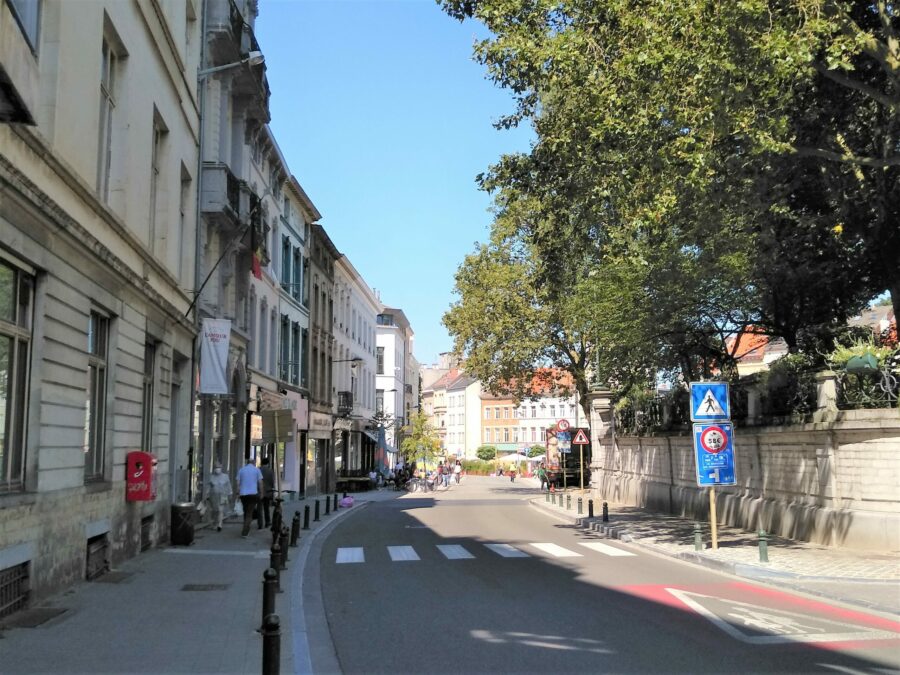
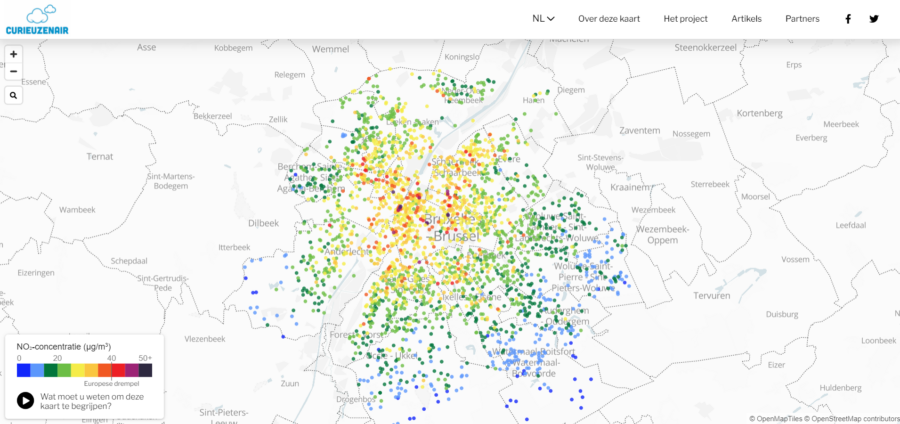
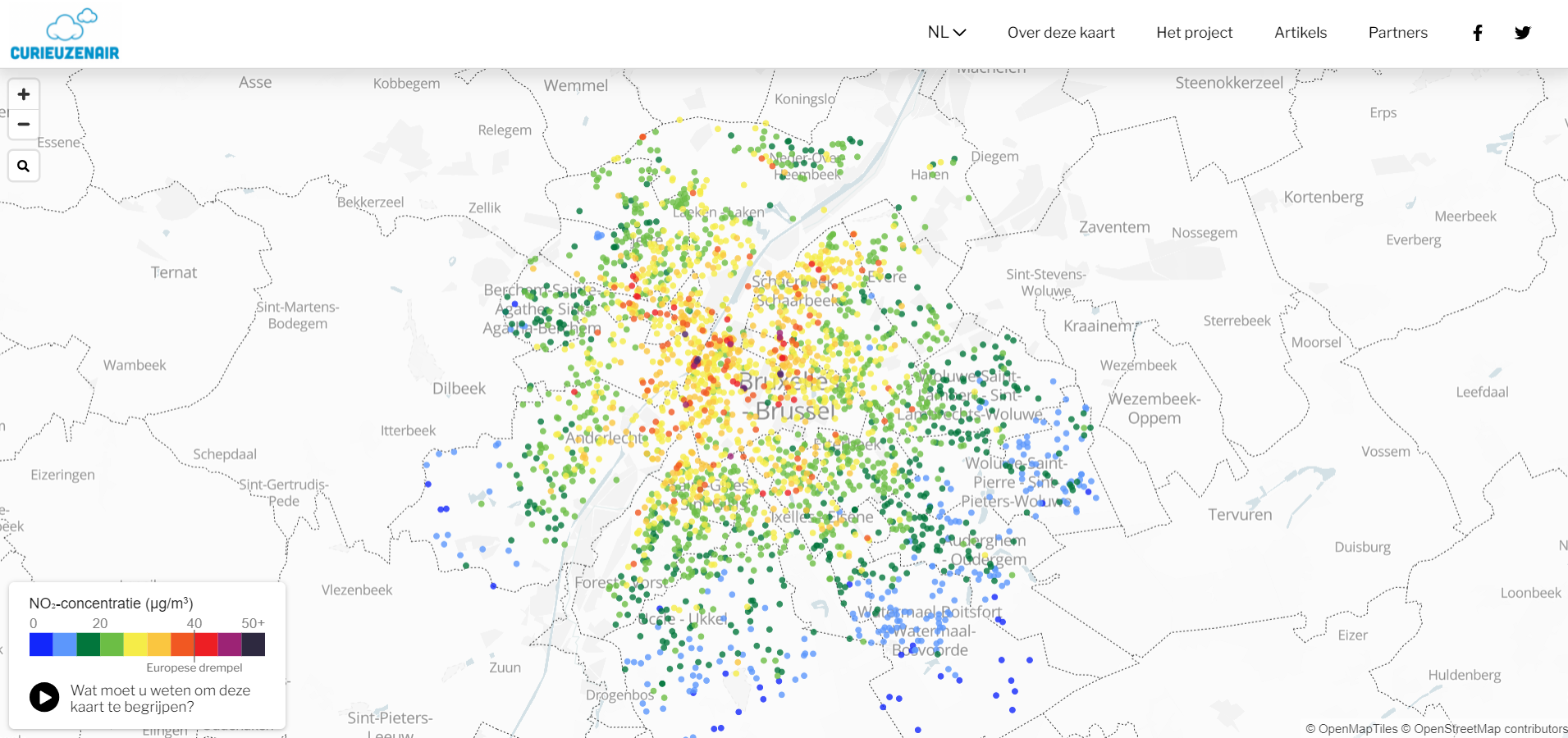
On the interactive dot map, each measuring point was assigned a colour corresponding to the value measured. While looking at the dotted map, it is striking that the air quality differs greatly from neighbourhood to neighbourhood, and even from street to street. From blue dots (0-15 µg m-3; ‘very good’) to a number of jet-black dots (>50 µg m-3; ‘extremely bad’), the CurieuzenAir dataset makes it clear that these differences are explained by emissions from Brussels traffic.

The lowest NO2 concentration of 6.2 µg m-3was measured in the middle of the Sonian Forest, a location spared from traffic emissions. The lowest NO2 concentration in a residential area (8.1 µg m-3) was measured on a façade in the Vogelenzangstraat in Anderlecht. This is a remarkable measurement for an urban environment, where measured values below 10 µg m-3 are usually less frequent. This measurement value indicates that there are also residential areas in Brussels with very good air quality.

At the other end of the spectrum, there are also outliers. The highest value (60.5 µg µg m-3) was recorded along the busy Nieuwpoortlaan, and there are also measuring points along the inner ring road that exceed the limit of 50 µg m-3. These high values are explained by a combination of heavy traffic and little air circulation due to high-rise buildings. Olivier Brasseur, air quality expert at Brussels Environment, explains: “The highest nitrogen dioxide concentrations are reached in places with heavy traffic. These concentrations are amplified by a “canyon effect”, the presence of buildings on either side of the street, which causes the pollutants to linger in the street, as it were. Surprisingly, there are different NO2 concentrations within one and the same street. This can be explained by the structure of the street, which gives more or less free rein to the wind in some places. In addition, stop-and-go traffic at intersections and traffic jams during the morning and evening rush hours cause increased emissions and high peaks. This translates into red and purple dots on the CurieuzenAir dot map.


Telecommuting and cleaner car fleet helping to improve air quality

Thanks to the large volume of CurieuzenAir data, Curieuzenair can estimate NO2 exposure for the entire population of Brussels. CurieuzenAir found that 1.4% of Brussels citizens – 17,000 people – are exposed to air quality exceeding the 40 µg/m3 European air quality standards. Additionally, 98.4% of the population – 1,200,000 inhabitants – live or work in areas exposed to pollution above the World Health Organization’s new threshold value, above 10 µg m-3, showing the broad impact of air pollution on the community’s public health.

“It is definitely not pleasant to hear that you live or work at a red location,” says Professor Filip Meysman (UAntwerpen), coordinator of CurieuzenAir. “But that is also the purpose of our research: to make hotspots of air pollution visible and ensure that local policy makers can improve the traffic situation. On the other hand, we are surprised to see that this is a relatively small percentage. Only two years ago, it was estimated to be around 10%, and ten years ago, even half of the Brussels population was above the norm. The official measuring stations of Brussels Environment show the same declining trend. The air quality in Brussels is therefore clearly improving.” The researchers see a number of important explanations for the recent improvement. The corona effect caused telecommuting and thus less traffic during the measurement period. But the increasingly clean car fleet, higher bicycle use and the low-emission zone also play a role, and these are lasting effects. The CurieuzenAir data show that such measures do improve the quality of life in a large city.

Despite the encouraging measurement results, action is needed to improve air quality in the city. In September 2021, the World Health Organisation presented a new threshold value: above 10 µg m-3, the first health effects are noticeable. And that is quite sobering: based on the CurieuzenAir data, 98.4% of the population – or 1,200,000 inhabitants of Brussels – live or work in areas exposed to pollution above this health standard.

Alain Maron, Brussels Minister for Climate Transition, Environment, Social Affairs and Health: “CurieuzenAir is a great example of the importance of citizen science. Thanks to all the citizens that took part in the project, we collected unprecedented results on air pollution in Brussels, which help us to better understand the problem in our city. While we see that the situation is slowly improving, the concentrations measured still remain unacceptable, and call for urgent, in-depth action. We need to make sure that everyone in the city, wherever they live and whatever they earn, get to breathe a clean and healthy air.”

“We know that you can’t manage what you don’t measure—and this valuable data and research will enable the Brussels-Capital-Region, Brussels Environment, and civil society to combat this air pollution crisis,” said Antha Williams, who leads environment programs at Bloomberg Philanthropies. “Tackling air pollution in Brussels will save lives, and will especially benefit the most vulnerable, including children and the elderly who are most susceptible to the harmful effects of poor air quality.”


Good air quality is important for all inhabitants of Brussels

The CurieuzenAir dataset provides a very detailed picture of air quality in the various districts of Brussels. The NO2 concentrations show remarkable differences between neighbourhoods, streets and sometimes within the same street. Researchers from Université libre de Bruxelles placed the CurieuzenAir data alongside socio-economic characteristics of the various neighbourhoods. “What is striking is the difference in air quality between the orange and yellow dots in the centre and the blue-green periphery of Brussels,” explains Dirk Jacobs, full professor in Sociology at ULB. “The three neighbourhoods with the best air quality in the region are located in Uccle and the three neighbourhoods with the highest NO2 concentration are found in the city centre and near the inner ring road.” Neighbourhoods with a higher population density tend to score worse in terms of air quality. Moreover, the Curieuzenair data shows a clear link between income and air pollution exposure: the more deprived neighborhoods, the worse air quality is. “Ironically, this also means that in the neighbourhoods where car ownership per household is lower, the air quality is nevertheless worse because of the impact of nearby traffic”.

“The results from CurieuzenAir show that the health effects for the people of Brussels are unevenly distributed. We are not all in the same boat,” says Raf Pauly of BRAL, Brussels’ urban movement, and a co-initiator of CurieuzenAir. “But the measurement result in your street is not equal to your own daily exposure. We only spend part of our time at home. People from the blue-green periphery also go to study, work or shop in the Vijfhoek. So we all have an interest in seeing the air quality across the whole of Brussels improve significantly and we need to work hard to achieve that.”

CurieuzenAir is an initiative of the University of Antwerp, urban movement BRAL and Université libre de Bruxelles, in close cooperation with Brussels Environnement, De Standaard, Le Soir and BRUZZ. This program is supported by Bloomberg Philanthropies’ Brussels Clean Air Partnership.
Download the scientific report here
Check out the results on the dotted map!
18 Mar

Check out the results on the dotted map!

Curious about the air quality in your neighbourhood and in Brussels as a whole? Good news! The time has come for you to check out the results of the CurieuzenAir measurements on the dotted map on the websites of Bruzz, De Standaard and Le Soir.

Today our media partners are diving a little deeper into the results online with extensive content on air quality in Brussels. Tomorrow also in the newspapers and in the special supplement magazines: do not miss out and be sure to read along!

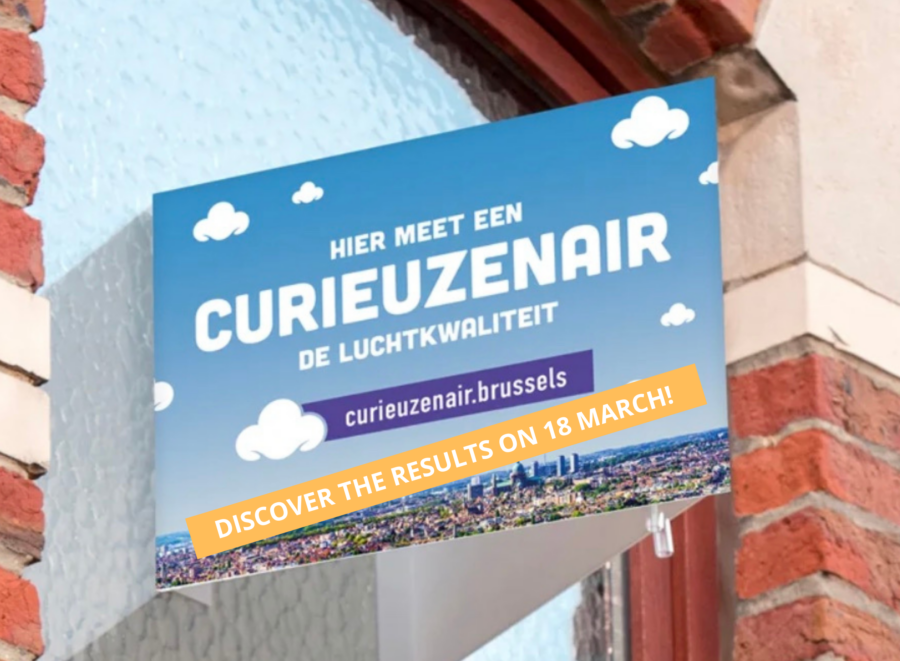
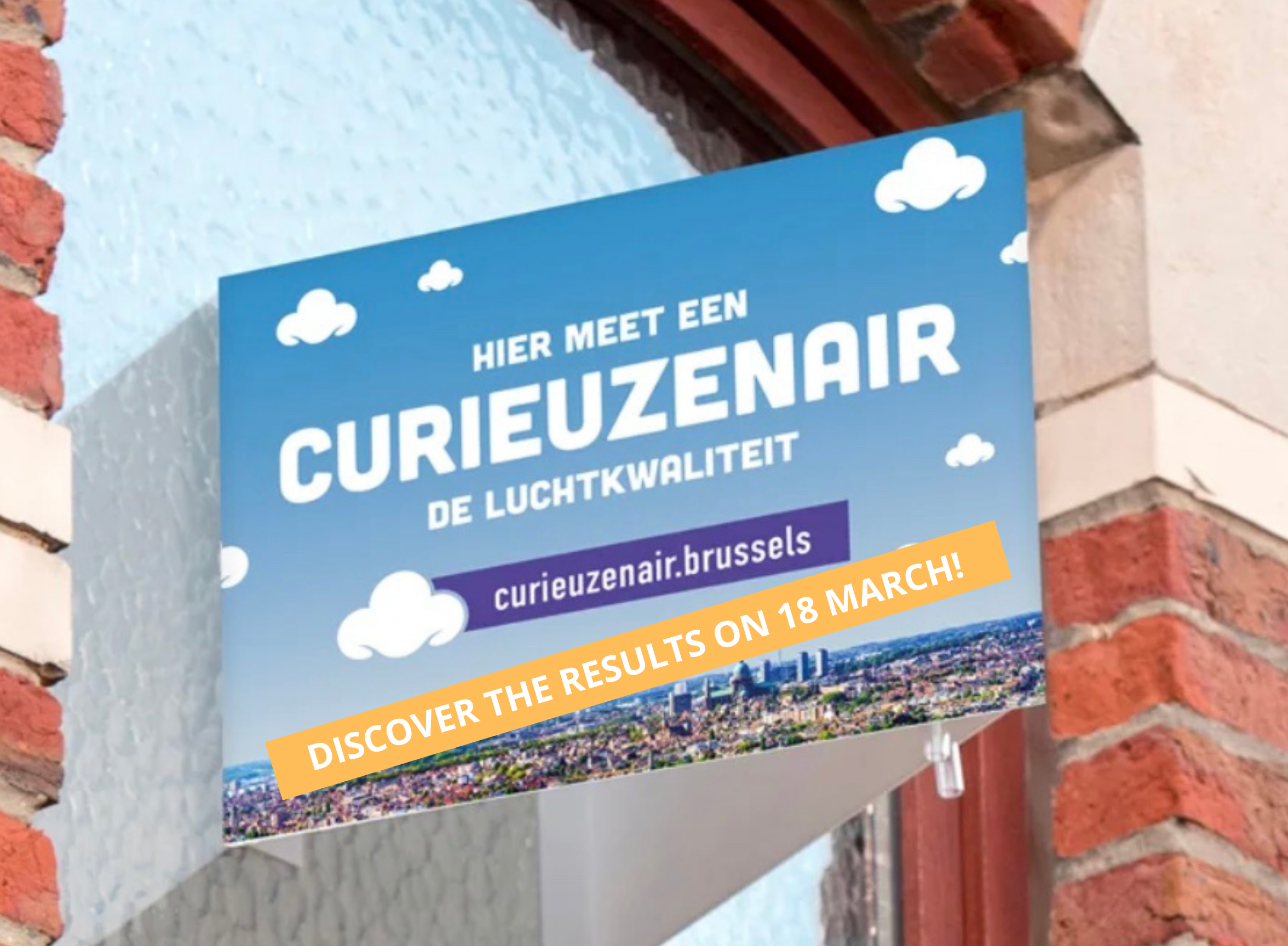
Discover the results on 18 March 5 pm
17 Mar

Discover the results on 18 March 5 pm

In October 2021, 3.000 CurieuzenAirs took part in the largest citizen survey on air quality ever conducted in Brussels. On Friday 18 March at 5pm we will annouce the results!

Over the past few months, the analysis of the measuring tubes was carried out in the laboratory. Now that these have been completed and the calculations have been made, we will share the results on Friday 18 March at 5pm.

Participants will receive an e-mail with their personal measurement result that day. From then on, the results from all measurement points in Brussels will also be available on an interactive dot map on the websites of De Standaard, Le Soir and BRUZZ.

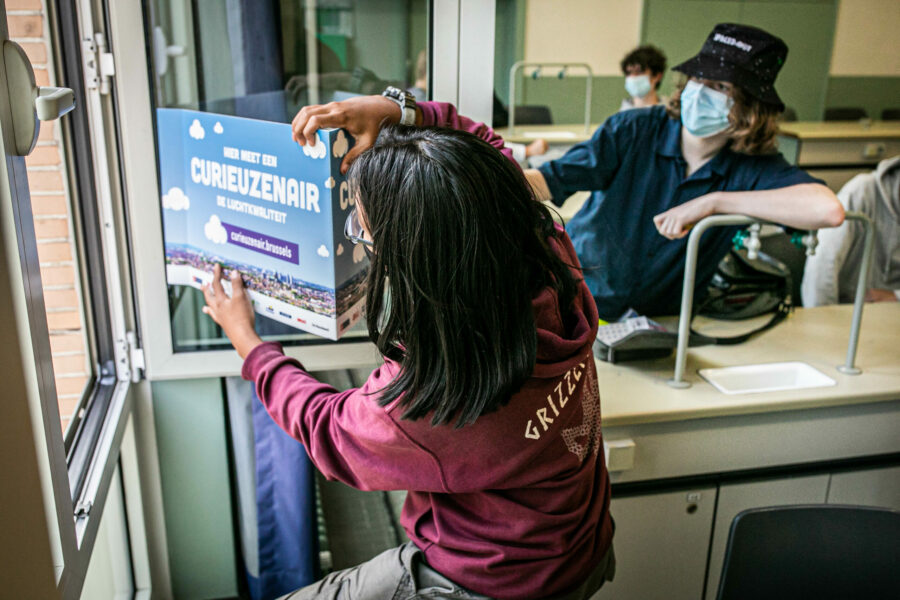
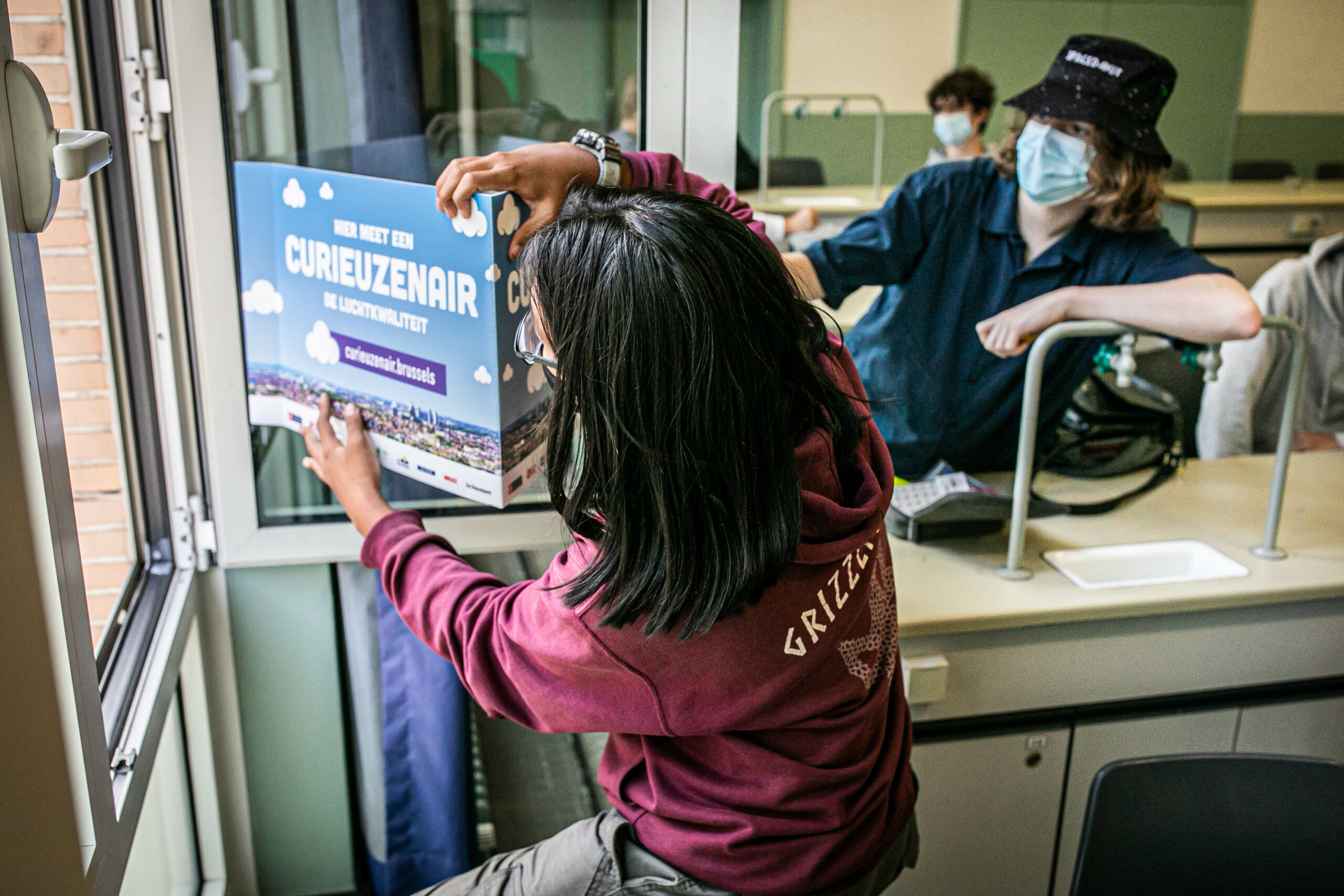
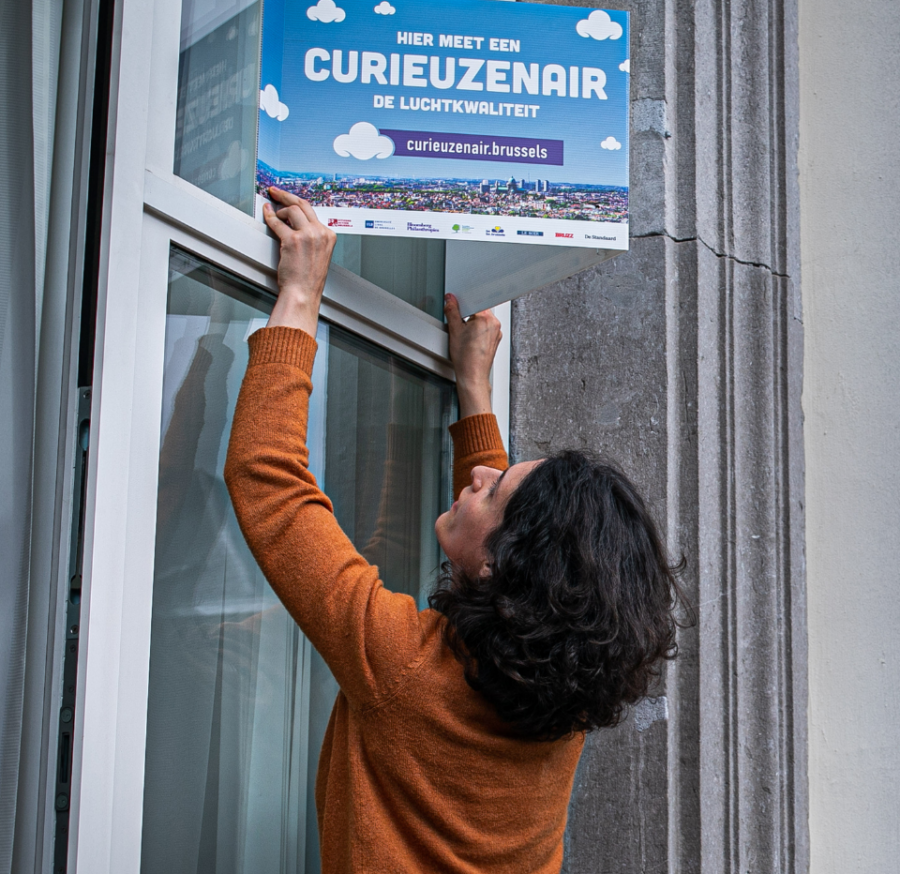
Were you one of the measuring points? Hang your results poster on your window to tell your neighbours about the measurement result. Did you lose the poster? Download a new poster here.

The results are almost in!
09 Feb

The results are almost in!

In October 2021, 3.000 CurieuzenAirs took part in the largest citizen survey on air quality ever conducted in Brussels. On Friday 18 March we will annouce the results!

Over the past few months, the analysis of the measuring tubes was carried out in the laboratory. Now that these have been completed and the calculations have been made, we will share the results on Friday 18 March at 5 pm.

Participants will receive an e-mail with their personal measurement result that day. From then on, the results from all measurement points in Brussels will also be available on an interactive dot map on the websites of De Standaard, Le Soir and BRUZZ.

Want to know more about the analysis of the tubes in the laboratory? Watch the video below (Dutch/French)!

La Fondation Habitat Groupé Tivoli
22 Nov

La Fondation Habitat Groupé Tivoli

La Fondation Habitat Groupé Tivoli

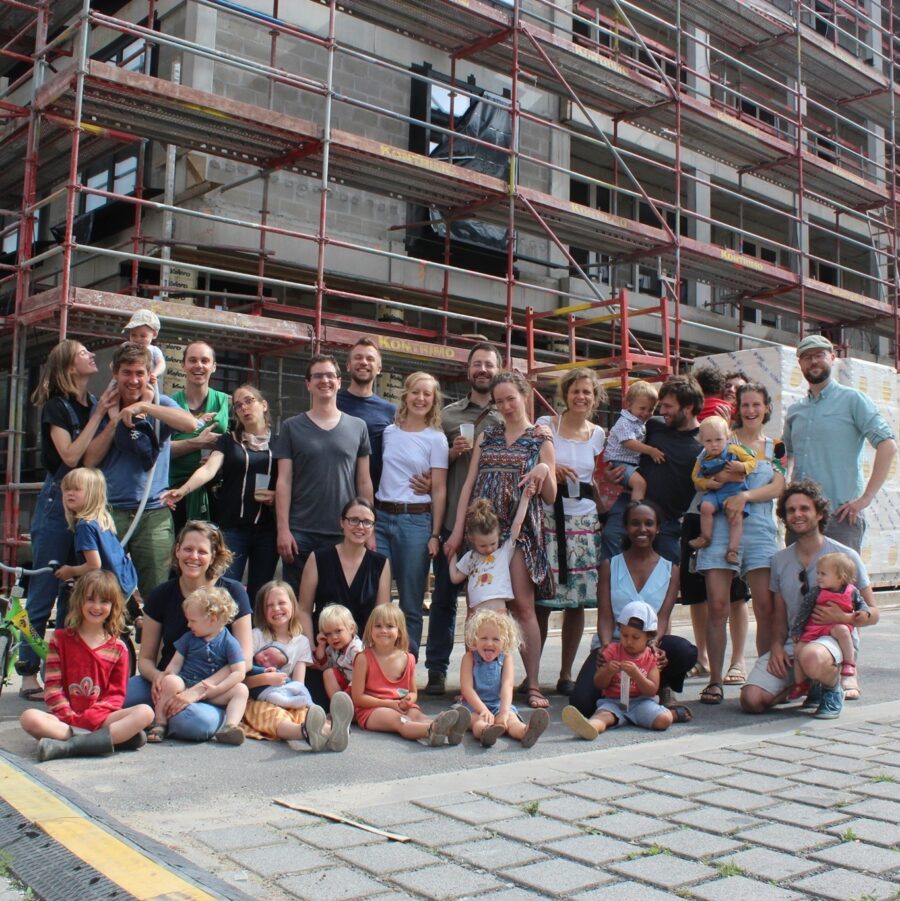
The Habitat Groupé Tivoli Foundation is a residential community founded by 9 families who want to live differently in Brussels. They were thinking about the project for years and finally their dream came true in March 2021. Since then, they have lived happily in a beautiful building designed for living together, in the heart of the sustainable Tivoli district, a stone’s throw from Tour & Taxis.

Why are you participating?

We moved to this brand new street in Brussels less than a year ago, so naturally we are very curious about the air quality around us.

waar-op-de-schaal

-What do you think the air quality is like in your street?

Between 25 and 30 µg/m³. We live in a quiet neighbourhood in a zone 30, but it is not green and it is quite dense. Nevertheless, there is little traffic in front of our building and we sincerely hope that the air quality in our street will not exceed the health standard! Depending on the result, we will see what efforts we can make together with the neighbourhood.

Where: black is 55 – 60+ micrograms NO2/m3, the highest values measured: near the Brussels ring road. Light green is 20 – 25 micrograms NO2/m3, a street in a quiet green area, well below the health standard.

GC Het Huys
22 Nov

GC Het Huys

Gemeenschapscentrum Het Huys

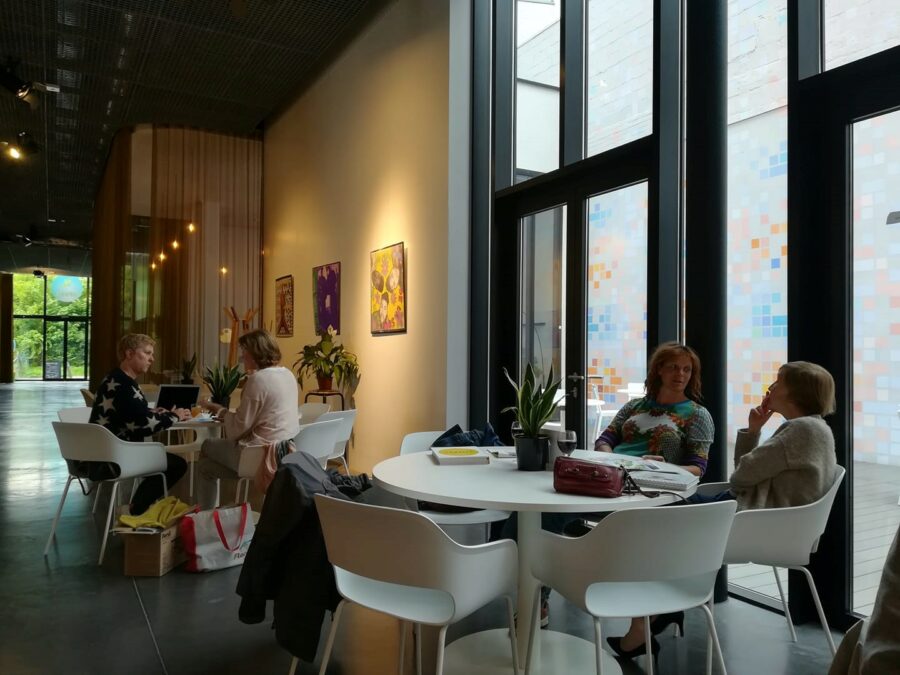
Community centre Het Huys opened only three years ago and is the successor to the Candelaershuys in Uccle.In the neighbourhood, GC Het Huys is known for its high-profile concerts, warm welcome and atmospheric venue.” Connection, social contact, working together, giving people a say in how things work, voluntary work are key words in what we do,” is told us.

Why are you participating?

Out of solidarity with other Brussels community centres that are taking part, and more importantly because we are concerned about the liveability of our neighbourhood. There is a school directly opposite us.  In this station neighbourhood, there is a lot of (bus) traffic. With our participation, we want to gain insight into the real state of the air quality.

In our educational programme, we pay attention to the climate. For example, we do workshops on how to turn waste into something useful.

waar-op-de-schaal

What do you think the air quality is like in your street?

Hard to say, given the traffic in this station neighbourhood. We hope for a blue result.

Where: black is 55 – 60+ micrograms NO2/m3, the highest values measured: near the Brussels ring road. Light green is 20 – 25 micrograms NO2/m3, a street in a quiet green area, well below the health standard.

Ancienne Belgique
22 Nov

Ancienne Belgique

Ancienne Belgique

Ancienne Belgique is a vibrant music venue in the heart of Brussels that welcomes more than 300,000 music lovers every year. Besides concerts, AB organizes the summer festivals Boterhammen & Feeërieën and supports various charities every year. AB is also the proud founder and coordinator of Liveurope, a platform of twenty iconic concert halls across Europe.

Why are you participating?

AB has a heart for music and for our planet. Sustainability plays an important role in all our decisions. We also want to stimulate environmentally conscious choices by our artists, employees, public, commercial partners and suppliers. Hence our participation in CurieuzenAir.

Healthy air has been a theme at AB for years. In 2018, for example, we also participated in the large-scale Luchtpijp campaign, we as well installed an air filter on our facade in the Anspachlaan. With CurieuzenAir, we want to continue this commitment wholeheartedly.

What do you think the air quality is like in your street?

waar-op-de-schaal

We expect our measurement to be in the range of 30-35 µg NO2/m³. We are particularly curious about the effect of the pedestrian zone, which has been in place since 2015.

Where: black is 55 – 60+ micrograms NO2/m3, the highest values measured: near the Brussels ring road. Light green is 20 – 25 micrograms NO2/m3, a street in a quiet green area, well below the health standard.

RSC Anderlecht
22 Nov

RSC Anderlecht

RSC Anderlecht

RSC Anderlecht is one of the most beautiful and biggest football clubs in the country with no less than 34 national titles on its record. The stadium of RSC Anderlecht, the Lotto Park, is located in the Astridpark at the Théo Verbeecklaan in Anderlecht.

Why are you participating?

Anderlecht is a football club that is well embedded in Brussels and committed to our metropolis. The urban challenges Brussels faces are also very important to us. Lotto Park is located in a residential area in a densely populated municipality and is therefore interesting to use as a reference point.

It is no coincidence that the slogan ‘Mens Sana in Corpore Sano’ still adorns the Anderlecht emblem. A healthy, balanced lifestyle is one of the core values of our professional football club. Whether it is about the sport itself, the nutrition or indeed the air quality.

What do you think the air quality is like in your street?

waar-op-de-schaal

Because the past measurements too often left Brussels out, not much is known about the air quality around the RSCA stadium. All the more reason to participate immediately in the Brussels edition of CurieuzenAir. The stadium is located in a green park (the Astridpark) and most parking places are a bit further away. On the other hand, the Brussels Ring Road is not far away, the neighbourhood is crowded and many cars and public transport pass the stadium (on non-game days).

Where: black is 55 – 60+ micrograms NO2/m3, the highest values measured: near the Brussels ring road. Light green is 20 – 25 micrograms NO2/m3, a street in a quiet green area, well below the health standard.

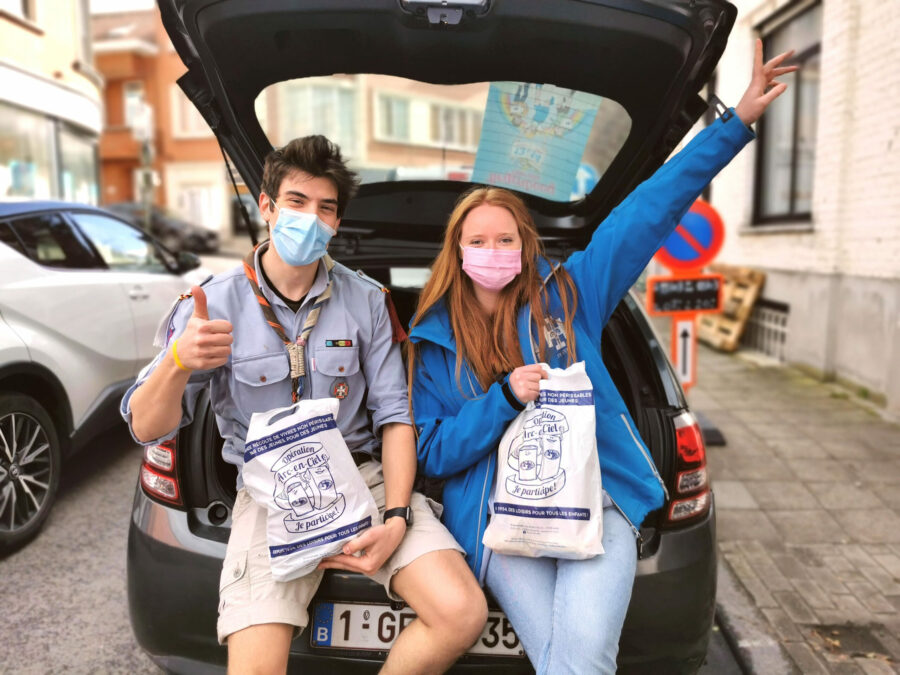
Arc-en-Ciel
22 Nov

Arc-en-Ciel

Arc-en-ciel

Arc-en-Ciel, founded in 1954, is a recognised youth association and is aimed at teenagers and children from working-class areas. The non-profit association organises actions to collect food, toys and school materials. Arc-en-Ciel brings together more than 370 associations active in the youth and young people’s welfare sector and represents more than 25,000 children and youth in Wallonia and Brussels.

Why are you participating?

As a youth club, we think it is important to contribute to a better quality of life for our children and young people. Activities in the open air are essential for this, it goes without saying that we want to contribute to healthy air.

waar-op-de-schaal

What do you think the air quality is like in your street?

Between 25 and 30 µg/m³. We are fortunate to work in a green and – we think – little polluted municipality. Even though the presence of heavy traffic in the vicinity of the Keymplein can negatively influence this result during rush hour. We are looking forward to the results!

Where: black is 55 – 60+ micrograms NO2/m3, the highest values measured: near the Brussels ring road. Light green is 20 – 25 micrograms NO2/m3, a street in a quiet green area, well below the health standard.

Ixelles
22 Nov

Ixelles

Municipality of Ixelles

Ixelles is located in the south of Brussels and has around 87,000 inhabitants. The warm, diverse commune has a unique atmosphere that offers something for everyone: shops, culture and sports.

Why are you participating?

The municipality of Ixelles is fully committed to preserving the common wealth of our municipality.  Improving air quality and combating global warming are therefore top priorities.

Knowledge is power, therefore it is important to thoroughly map the air quality before making any decisions. Ixelles encourages all steps in the right direction, especially when citizens are involved. We were therefore immediately convinced.

Improving air quality is high on the agenda of the current administration. During this legislature, Ixelles was the first commune in Brussels to launch a campaign (#PetitPoumons) to measure the air quality in nurseries, homes and schools.

waar-op-de-schaal

What do you think the air quality is like in your street?

Our measurement point is on the Elsensesteenweg, close to the town hall. According to us, the average annual NO2 concentration there is between 25 and 30 µg/m³.

The Elsensesteenweg is partly car-free. We hope that this has had a drastic impact not only on traffic but also on air quality.

Where: black is 55 – 60+ micrograms NO2/m3, the highest values measured: near the Brussels ring road. Light green is 20 – 25 micrograms NO2/m3, a street in a quiet green area, well below the health standard.

  • 1
  • 2
  • 3

About CurieuzenAir

CurieuzenAir is a citizen science project that measures the air quality in Brussels.
It is an initiative of the University of Antwerp, the urban movement BRAL and the Université libre de Bruxelles, in close collaboration with Bloomberg Philanthropies, Brussels Environment, De Standaard, Le Soir and BRUZZ.

Search

Our privacy policy

© 2026 · Curieuzenair

We gebruiken cookies op deze website om je surfervaring te optimaliseren.
Door op 'accepteren' te klikken, ga je hiermee akkoord.
Privacy statementACCEPTREJECT
Manage consent

Privacy Overview

This website uses cookies to improve your experience while you navigate through the website. Out of these, the cookies that are categorized as necessary are stored on your browser as they are essential for the working of basic functionalities of the website. We also use third-party cookies that help us analyze and understand how you use this website. These cookies will be stored in your browser only with your consent. You also have the option to opt-out of these cookies. But opting out of some of these cookies may affect your browsing experience.
SAVE & ACCEPT